
Burnout + ADHD: The often overlooked drivers of overload
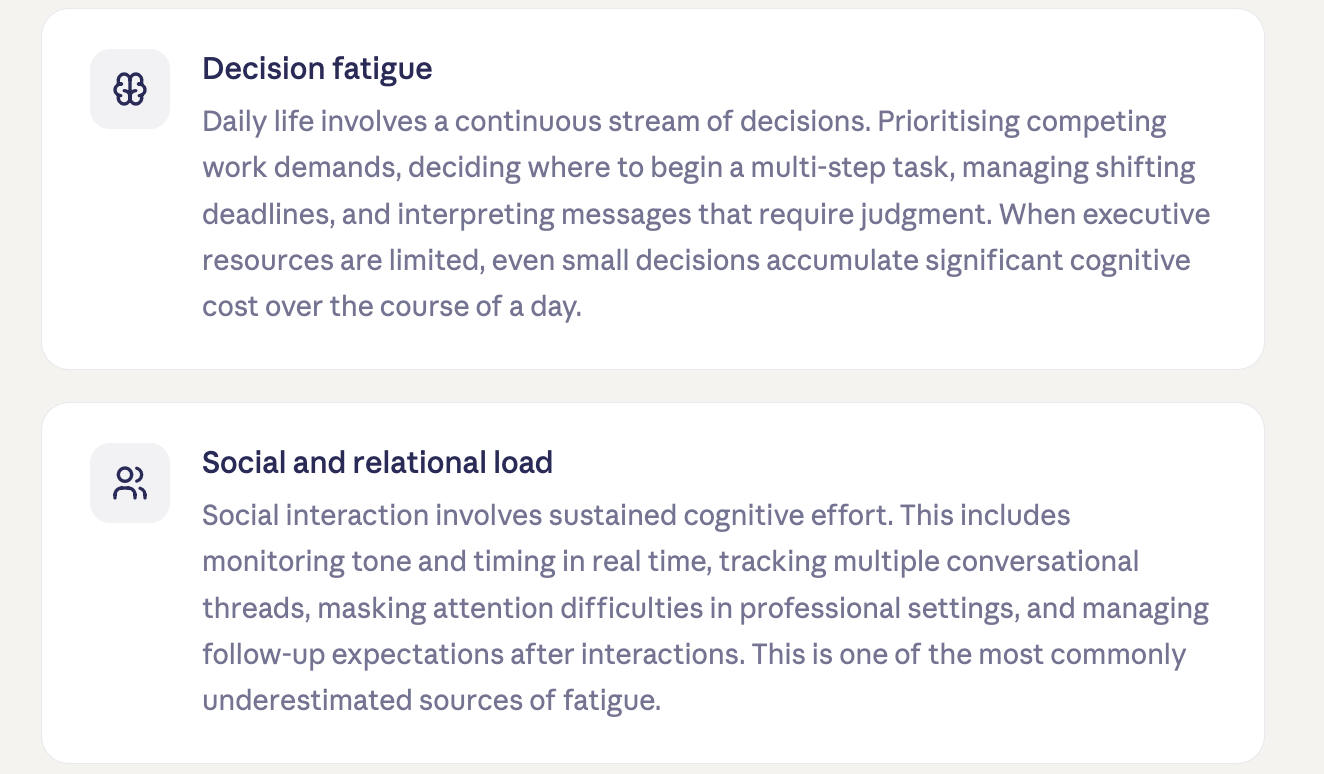
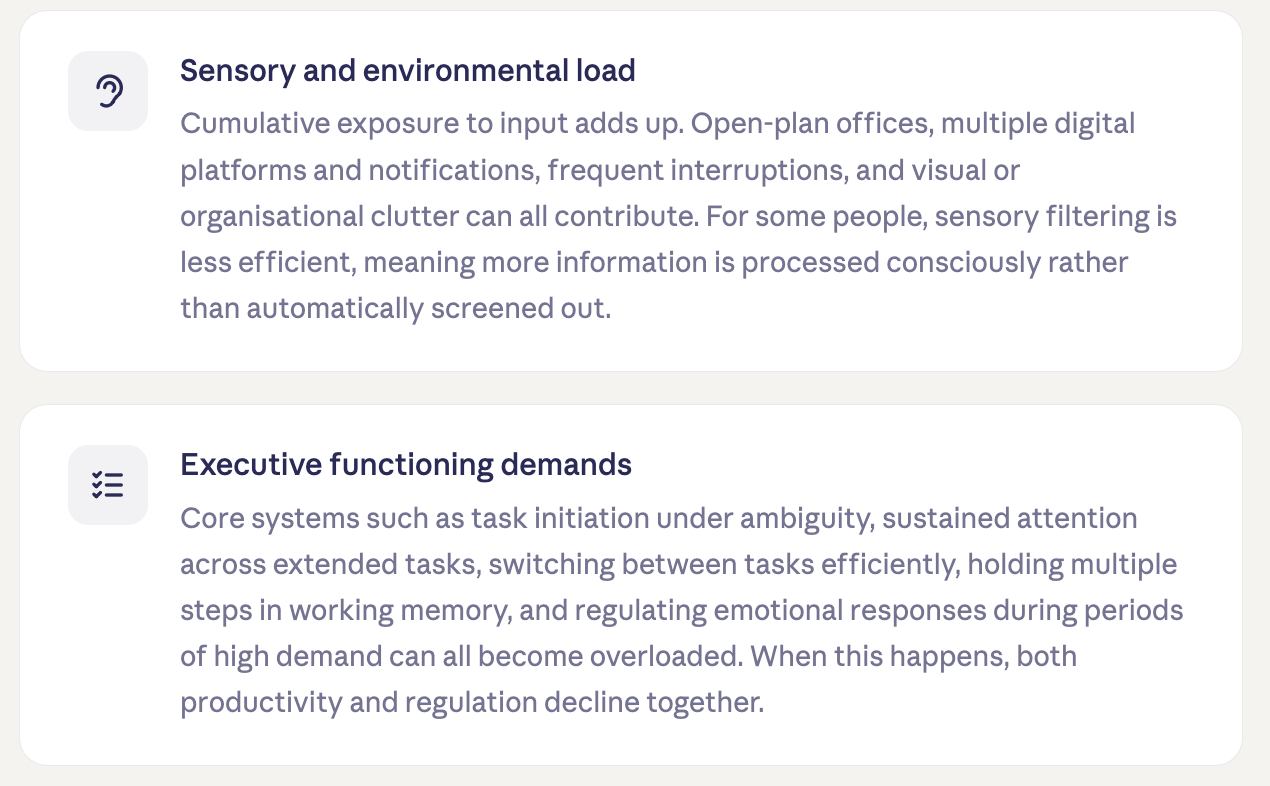
Burnout is often talked about as simply doing too much, but in practice it is usually more complex than that. It can reflect the cumulative impact of cognitive load, emotional demands, sensory input, and ongoing executive functioning requirements, with limited opportunity for recovery. This is something all people can experience at different points in their lives.
For individuals with ADHD traits or a diagnosis, these demands can feel more intense or harder to regulate over time. This is not about being less capable or needing to try harder. It is about differences in how attention, regulation, and executive functioning systems manage sustained demand and recovery.
What drives the overload:
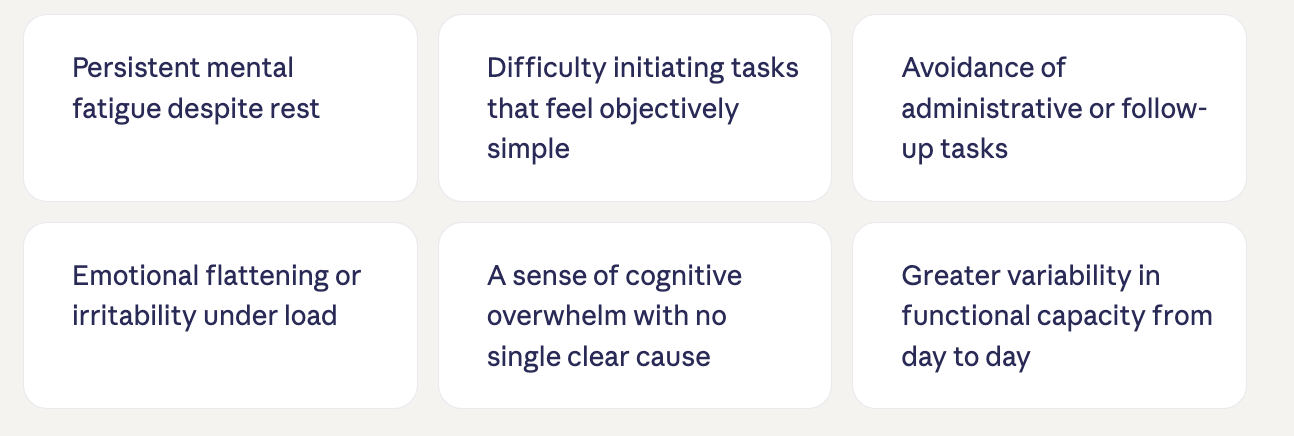
Common lived experiences:
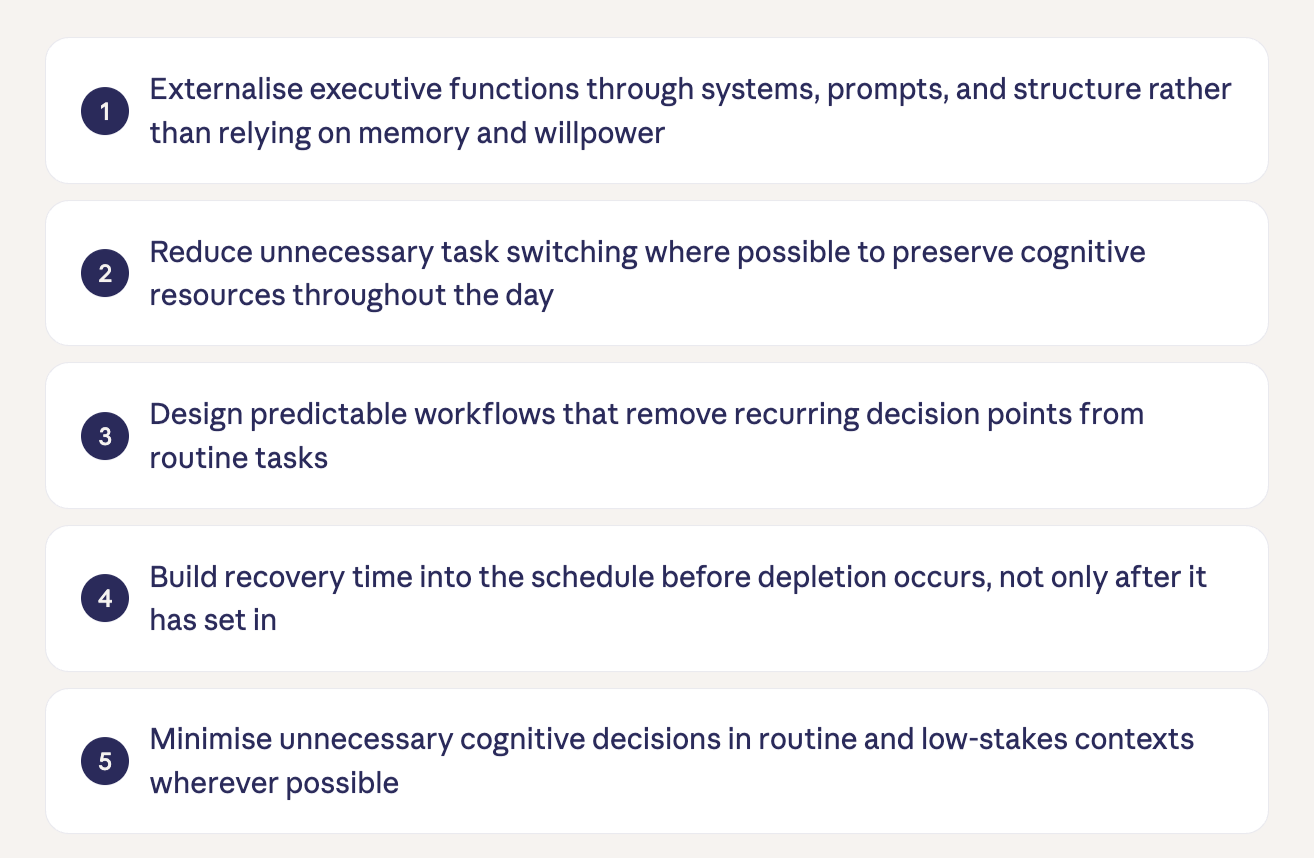
Support strategies:
Support tends to be most effective when it reduced load rather than increases effort. Some approaches that can help include:
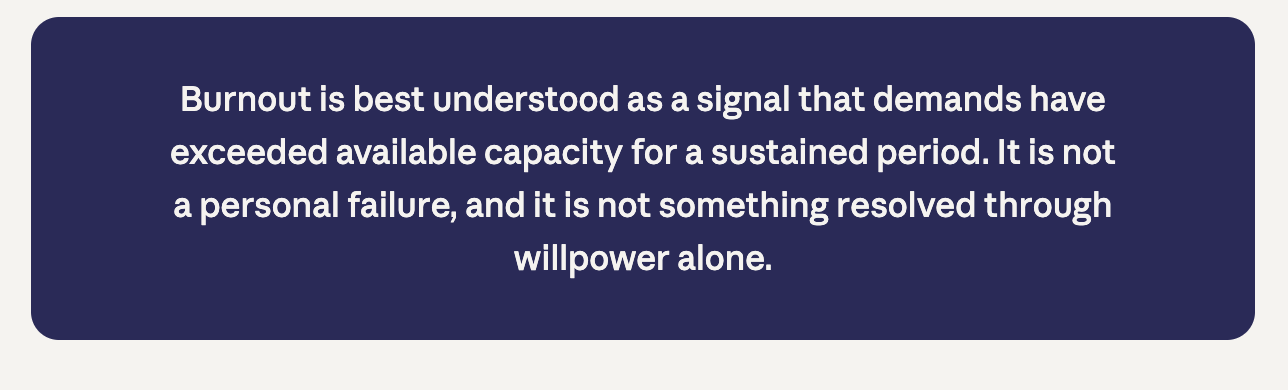
Burnout can come from the interaction between the demands placed on a person and their available capacity for regulation and recovery.
Identifying patterns of overload is often far more useful than focusing solely on motivation or discipline. If any of this resonates, speaking with a psychologist who understands ADHD and executive functioning can be a helpful place to start.